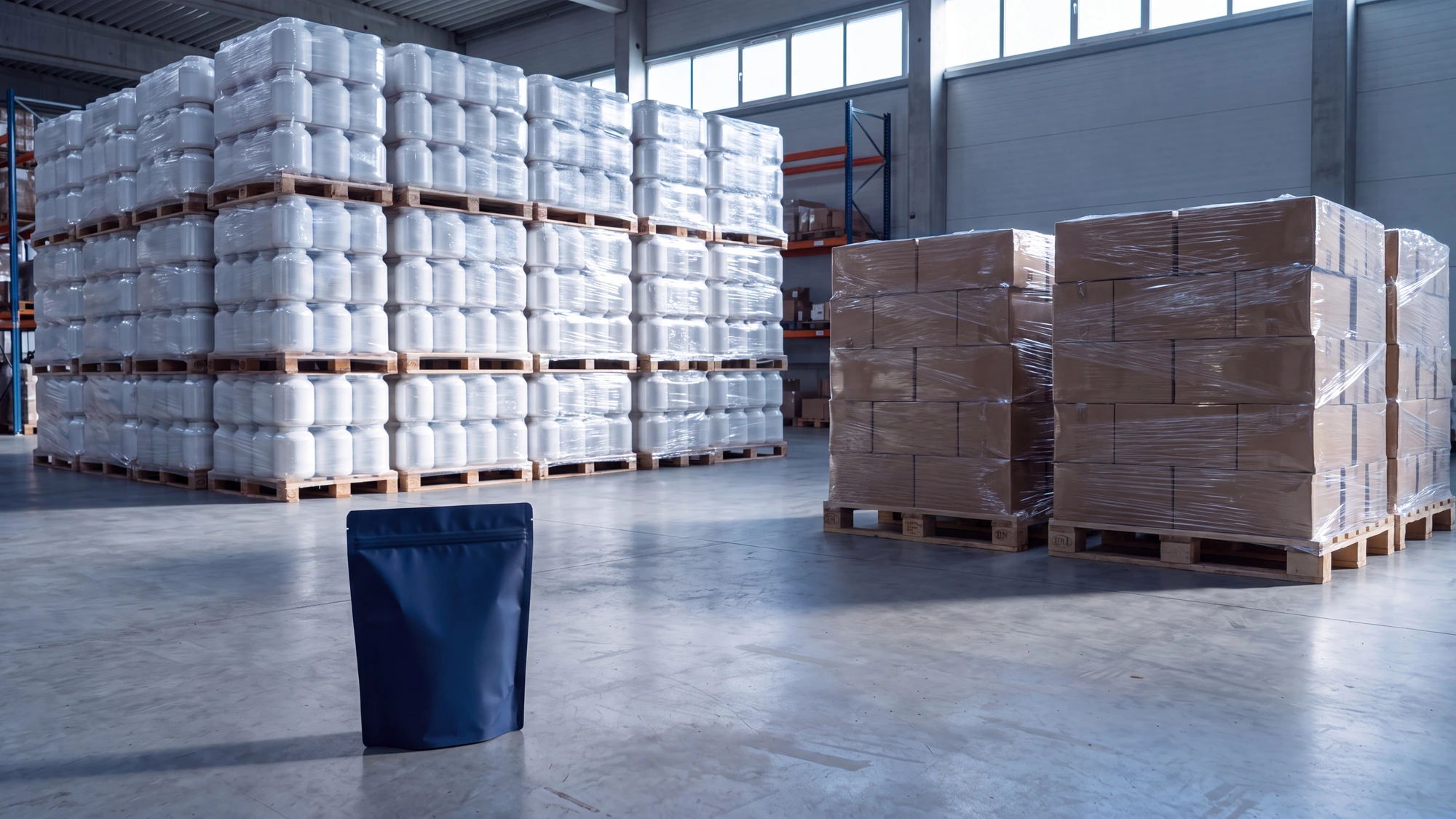
When you weigh flexible packaging vs rigid packaging for UK supplements, the maths makes the decision for you.
Walk down the sports nutrition aisle of any major UK retailer today, and you will see a landscape in transition. The heavy, air-filled rigid plastic tubs that defined the category for two decades are disappearing. In their place: high-barrier, gloss or matte-finished flat bottom pouches and stand-up bags.
This is not an aesthetic trend, and it is not purely an environmental crusade. It is a structural market shift driven by cold, hard economics. Brands that move early gain a structural cost advantage. Brands that wait pay higher EPR fees, higher freight costs, and manage a more complex supply chain.
If you are a founder or operations director currently buying rigid tubs, this guide breaks down exactly why the industry is moving to flexible packaging, and the business case that proves why you should too.
The Shift That Is Already Happening
The transition from rigid tubs and jars to flexible pouches is accelerating across the nutritional supplements, vitamins, pet food, and dry CPG categories. Major players have already made the switch, moving their flagship protein powders, collagen peptides, and dry kibble into flat bottom and stand-up pouches.
This acceleration is being driven by a convergence of four factors:
- EPR plastic weight fees. UK Extended Producer Responsibility (EPR) fees heavily penalise the sheer weight of plastic placed on the market.
- Retailer sustainability mandates. Major UK multiples are enforcing strict plastic reduction targets on their suppliers.
- DTC logistics costs. Shipping air and heavy plastic erodes direct-to-consumer margins.
- Consumer preference. Buyers increasingly view oversized, half-empty rigid tubs as wasteful and deceptive.
Can flexible packaging replace rigid tubs for protein powder?
Yes, and in most cases it is the better format. A high-barrier flexible pouch provides the Moisture Vapour Transmission Rate (MVTR) and Oxygen Transmission Rate (OTR) protection required to keep the powder free-flowing and shelf-stable, matching the barrier performance of a rigid tub when the laminate structure is specified correctly. With wide-mouth press-to-close zippers or powder proof seals, the consumer experience of scooping and resealing is entirely preserved.
This is not a fleeting trend. Brands that transition now lock in lower operational costs and insulate themselves against future regulatory penalties.
The One-Component Argument
The strongest commercial argument for flexible packaging is not about the environment. It is about procurement simplicity.
Look at a standard rigid tub of pre-workout or protein powder. To put that product on a shelf, you are managing three separate components:
- The rigid plastic tub
- The plastic lid or cap (often with a liner)
- The printed label
That means three separate supplier relationships. Three different lead times. Three separate points of quality control. When you report your packaging data for UK EPR, you are reporting three separate material lines.
When you switch to a printed flexible pouch, you are buying one component.
You have one supplier, one production run, and one EPR line to report. The hidden costs of rigid packaging vanish overnight: sourcing caps that fit correctly, managing label print lead times to match tub delivery, holding inventory of bulky empty tubs, and the assembly line complexity of applying labels to curved surfaces.
Want to see how a one-component switch could simplify your supply chain? Request a Quote and we will talk it through with you.
Plastic Weight Reduction and EPR Impact
The UK's Extended Producer Responsibility (EPR) scheme fundamentally changes how brands must think about packaging. EPR is a cost-allocation mechanism: you pay fees based on the weight and recyclability of the packaging you place on the market.
How does flexible packaging reduce EPR costs?
It reduces costs by drastically cutting the total weight of plastic you use.
A typical rigid HDPE or PET tub plus PP cap setup carries significantly more material weight than a high-barrier flexible pouch designed to hold the same product volume. The difference is not marginal. Flexible packaging delivers a meaningful reduction in plastic tonnage per unit, and because EPR fees are calculated on tonnage, that reduction translates directly into a lower EPR liability.
The incoming EU Packaging and Packaging Waste Regulation (PPWR) compounds this advantage. PPWR mandates minimum Post-Consumer Recycled (PCR) content percentages by 2030. Sourcing PCR material carries a cost premium. The less packaging weight you put on the market, the less expensive PCR material you are required to buy.
A note on recyclability. We must be honest about the data. A mono-material rigid PET tub is widely recycled in the UK. Historically, multi-layer flexible pouches were not. However, the direction of travel is clear. The flexible packaging industry has rapidly transitioned to mono-material PE and PP structures that are recyclable via front-of-store collections, with kerbside collection expanding. Rigid currently wins on existing recycling infrastructure. Flexible wins overwhelmingly on carbon footprint, requiring less energy to produce, less fuel to transport, and generating a fraction of the end-of-life volume.
Storage and Logistics Benefits
The logistics savings generated by flexible packaging often exceed the unit cost savings of the packaging itself.
Pre-fill storage volume. Rigid tubs ship empty. When you pay to transport and store empty tubs, you are paying to transport and store air. The same pallet footprint that holds rigid tubs can hold many times more flat, unfilled flexible pouches. The reduction in warehouse space required for packaging inventory is transformative for growing brands.
What are the logistics benefits of flexible packaging over rigid?
The benefits compound throughout the supply chain:
- Freight cost per unit. Lighter, flatter packaging means you fit significantly more finished, filled product onto a pallet. Your freight cost per unit drops.
- DTC and e-commerce. For direct-to-consumer brands, flexible packaging is a game-changer. Pouches are lighter, reducing shipping weight. Certain pouch formats can be engineered to fit through standard UK letterboxes, drastically cutting postage costs and eliminating missed deliveries.
- Returns and damage. Rigid plastic tubs can crack or shatter when dropped in transit. Flexible packaging absorbs impact, resulting in lower breakage rates and fewer costly customer returns.
Ready to make the switch?
Multiprint works with UK supplement and CPG brands transitioning from rigid tubs to flexible pouches, matching the right barrier specification and format to each product.
Lead times from artwork approval:
- Rollstock (UK or EU): 10-15 working days
- Stand-Up Pouches (UK or EU): 15-20 working days
- Stand-Up Pouches (Asia): working 20-25 days
- Flat Bottom Pouches (EU & Asia: 25-40 working days
Flat Bottom Pouches are not manufactured in the UK. Shipping time from dispatch is separate from production lead time. Talk to us about your format and timeline before assuming it is not achievable.
Smaller Orders, More Often: The Cash Flow Advantage
Rigid tubs lock you into commitments. Custom moulds, large minimum order quantities, and weeks of empty-tub storage before you even fill them mean you commit serious cash to packaging before you have sold a single unit.
Flexible packaging changes the maths. Multiprint's three routes to market are all built for a growing brand's cash position: plain stock for sampling and validation, custom print on a standard tooled size, and custom print on bespoke dimensions. Each is accessible at a low entry point. Request a Quote and we will size the right route to your run.
That means you can order what you need for the next four to eight weeks of sales per SKU per channel, ship it, sell it, and reorder. Smaller orders, more often. Better cash flow. Less risk of being stuck with stock when you reformulate, rebrand, or get hit with new labelling rules.
Over-ordering rigid tubs to hit a moulding MOQ ties up cash, takes up warehouse space, and exposes you to legislative, formula, or design changes that can render the stock obsolete. Order smaller and more often beats bigger and less often.
Brand and Shelf Impact
Cost savings are critical, but packaging must ultimately sell the product. Flexible packaging offers superior merchandising capabilities compared to rigid tubs.
More panels to communicate. A label on a rigid tub is constrained by the geometry of the cylinder. A flat bottom pouch is a 5 or 6-panel construction, giving you significantly more real estate for brand storytelling, nutritional information, and mandatory compliance text without cluttering the design.
Premium sensory experience. Standard rigid tubs can look and feel like commodities. Flexible packaging allows for high-end finishes that signal a premium product. Soft-touch matte laminates, spot UV gloss highlighting, and matte or gloss finishes are all achievable on flexible pouches, creating a tactile experience that rigid tubs cannot match.
Print matched to your run. Multiprint runs three print technologies and matches the press to your run: digital for short runs and photo-quality artwork iteration, HD flexo for medium-to-high volumes, and rotogravure for the highest fidelity at the highest volumes. The same artwork can scale from a first short run to full retail volume without compromising finish quality.
Format flexibility. A single flexible pouch design can serve retail shelves, DTC shipping, and promotional sampling without the retooling or new mould costs associated with custom rigid containers. In the age of social commerce, flexible pouches photograph exceptionally well in flat-lay and lifestyle content, avoiding the harsh glare and awkward bulk of rigid plastic.
Rigid vs Flexible: The Decision Matrix
Use this comparison table to evaluate the business case for your specific product lines.
Winner reflects the typical case for a growing CPG brand; the right answer for a specific line depends on volume, channel and recycling priorities.
.webp)
Is flexible packaging cheaper than rigid for supplements?
In most cases, yes. When you calculate the total landed cost (unit price, inbound freight for empty packaging, warehouse storage space, outbound DTC shipping, and EPR weight fees), flexible packaging comes in significantly cheaper than a rigid tub setup. The exact difference depends on volume, format, and barrier specification, but the directional answer is consistent across every brand we work with.
The protein powder tub had a good run.
But the economics of packaging have changed. Between EPR fees, logistics costs, and the simplicity of managing one component instead of three, the business case for flexible packaging is undeniable.
We help UK supplement and CPG brands make the transition seamlessly, matching your required barrier specs and upgrading your shelf presence in the process. Request Plain Stock Pricing to get samples in your hands, or Request a Quote to talk through your project.

Read next
More articles from our team






Get the next post in your inbox
Compliance updates, lead-time news, and packaging guides. One email, no spam
Ready to spec your pouch?
Get a quote for your format and see lead times for your region
Start your order
Whether you need custom print or plain stock, we've got lead times that work